At a glance
This guide brings together the essentials for travelling in Indonesia: emergency numbers, travel documents, health and safety advice, natural hazards, driving rules, best times of year, culinary specialities and a few words of ‘Bahasa Indonesia’ (Indonesian).
Exploring Indonesia is like embarking on a great adventure. More than seventeen thousand islands stretch across nearly five thousand kilometres, from Sumatra to Papua, and each has its own climate, pace and customs. Bali attracts the majority of Belgian travellers, but Java, Lombok and Sulawesi offer very different travel experiences.
For a Belgian traveller, the distance should not be underestimated. The flight takes around fifteen hours, the time difference ranges from five to seven hours depending on the season and the island, and the entry formalities are unlike those of any European destination. The archipelago rewards those who prepare their trip well.
Emergency numbers: who to call in the event of a major problem?
In Indonesia, 112 acts as the single emergency number in most provinces and connects callers to local services. Other emergency numbers remain active and may be more effective outside major cities. Make a note of them before you set off, as mobile coverage is patchy on the smaller islands.
Emergency numbers
- General emergency number: 112
- Police: 110
- Ambulance: 118 or 119
- Fire brigade: 113
- Sea rescue: 115
- Card Stop (lost or stolen bank cards): +32 78 170 170
- Doc Stop (lost or stolen Belgian identity card or passport): 00800 2123 2123 or +32 2 518 2123
Assistance: Redion (Belgium)
In an emergency, always contact the local emergency services first.
Need help with a medical issue? Use the Redion Belgium app, available on the Apple Store and Google Play.
Do you need to sort out an administrative or contractual matter? Visit the Customer Area on the website: https://www.redion.be
How can you travel with peace of mind in Indonesia?
There are three key points to sort out before you set off: documents, medical cover and the best time of year to visit. Entry requirements have changed several times in recent years, healthcare services vary greatly from one island to another, and the monsoon season doesn’t occur at the same time everywhere. Preparing in this order will help you avoid most unpleasant surprises.
What travel documents are required for Indonesia?
For a tourist visit, Belgian travellers need:
- a passport valid for at least six months after the date of entry into the country, with two blank pages;
- a visa, obtained before departure or on arrival depending on the option chosen;
- an onward ticket, which airlines regularly check at boarding;
- an electronic customs declaration, to be completed in the days leading up to arrival.
A Belgian identity card is not sufficient. If your passport is nearing its expiry date, start the renewal process several weeks in advance. Read the article on this subject: Visa, ESTA or ETA: how to apply
What is healthcare like in Indonesia?
The quality of healthcare varies greatly from island to island. Jakarta, Surabaya and southern Bali have good-quality private clinics, which are often the only ones to meet international standards. Elsewhere, and particularly on the smaller islands, healthcare is limited to local clinics. Evacuation to Bali, Jakarta or Singapore may be necessary for serious medical treatment.
Two practical points to bear in mind:
- Consult a travel medicine centre six to eight weeks before departure. No vaccinations are required to enter Indonesia from Belgium, but several are recommended depending on your itinerary and the length of your stay.
- Check that your travel insurance covers medical transfer and repatriation. This is the most significant cost in an archipelago where the nearest suitable hospital may be two flights away.
Dengue fever, transmitted by a mosquito active during the day, is prevalent all year round and more so during the rainy season. Protection against bites is the most effective precaution you can take whilst travelling.
What is the security situation like in Indonesia?
Indonesia is a safe destination for a standard tourist trip. Crime targeting travellers remains mainly opportunistic: snatch thefts from motorbikes, break-ins at poorly secured accommodation, and scams involving the hire of motorbikes and diving equipment.
A few simple precautions are all it takes: do not carry your bag on the side facing the street, take photos of the condition of a scooter before hiring it, and never leave your passport as a deposit.
Certain provinces are subject to specific recommendations. Check the travel advice from the Federal Public Service Foreign Affairs before booking, and again before you set off.
Volcanoes, earthquakes and high-risk seasons
Indonesia lies on the Pacific Ring of Fire. The country has over 130 active volcanoes and experiences regular earthquakes, most of which have no impact on travellers.
This risk should not deter you, but you should be prepared for it:
- Volcanic eruptions mainly cause disruption to air travel. An ash cloud can close an airport for several days. A domestic flight may therefore be delayed, affecting your return journey.
- Volcanic hikes should not be undertaken on a whim and must be done with a local guide, whilst respecting restricted areas and safety guidelines.
- In the event of an earthquake near the coast (tsunami), the local practice is to move away from the coast and head for higher ground without waiting for an official warning.
What are the driving rules in Indonesia?
They drive on the left in Indonesia, and traffic is heavy, fast-moving and not very rule-bound. An international driving licence is required, even for a scooter. Without it, you are driving illegally and, more importantly, without insurance cover in the event of an accident.
Driving licence and breakdown cover
A Belgian driving licence alone is not sufficient: it must be accompanied by an international driving permit, which you should apply for at your local council before departure. Checks are frequent, particularly in Bali.
Check what the insurance on your hire vehicle covers. The vast majority of hire arrangements with private individuals or local agencies do not include proper insurance (third-party liability or personal injury cover). It is therefore strongly recommended that you take out additional insurance specifically covering the riding of a two-wheeler.
Scooters: a local staple and the leading cause of accidents
Scooters are the dominant mode of transport, and they are also the leading cause of accidents among travellers. Slippery roads during the rainy season, a lack of road markings, and continuous and sometimes chaotic traffic: the conditions are nothing like those in Belgium.
Wearing a helmet is compulsory. Renting one with the scooter does not guarantee its quality! Check the fastening and the condition of the shell.
Transport and getting around
Long distances are best covered by plane: the domestic network is extensive and inexpensive. Ferries connect neighbouring islands, though safety standards vary, particularly during the rainy season. In towns and cities, apps for booking cars and motorbike taxis are widely used and avoid the need for price haggling.
What can you visit in Indonesia depending on the season?
The climate is equatorial: hot and humid all year round, with two distinct seasons. Choosing the right time of year is more important here than in most destinations, as it determines access to certain islands and the feasibility of crossings.
The dry season, from April to October
This is the best time of year for the whole archipelago. Clear skies, calm seas and excellent visibility for diving in Komodo, the Gili Islands or the Lembeh Strait. It is also the season for volcano climbs, from Bromo to Rinjani, and the peak tourist season: book early for Bali in July and August.
The rainy season, from November to March
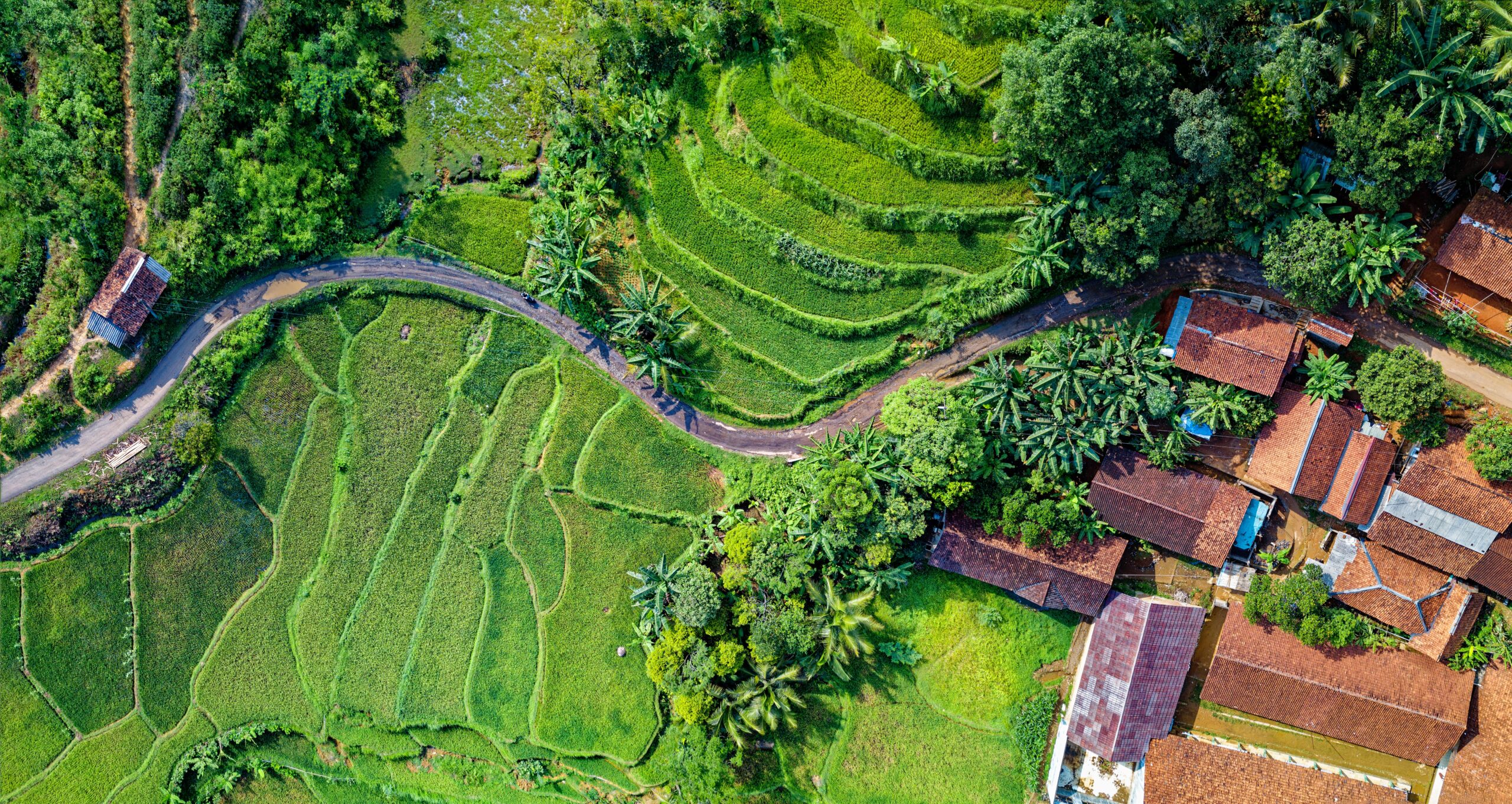
The downpours are intense but often brief, occurring in the late afternoon. The vegetation is spectacular, the rice paddies of Java and Bali are at their most beautiful, and prices are generally significantly lower. On the other hand, some ferry crossings are suspended and mountain roads become more difficult to navigate.
The shoulder season
April and October offer the best balance: moderate visitor numbers, reasonable prices and still favourable weather. This is the ideal time for a first trip combining several islands.
Did you know?
Indonesia is crossed by the Wallace Line, an invisible biological boundary that separates Asian fauna from Australian fauna. To the west of this line lie tigers, elephants and orangutans. To the east, marsupials and birds of paradise. Two islands separated by just thirty kilometres of sea can thus be home to entirely distinct animal worlds.
Further practical information on Indonesia
- Capital: Jakarta
- Official language: Bahasa Indonesia, but there are over seven hundred regional languages
- Currency: Indonesian rupiah (IDR)
- Area: approximately 1,900,000 km²
- Population: approximately 280 million
- Time zones: three, ranging from UTC+7 to UTC+9
- Electricity: 230 V, type C and F plugs, the same as in Belgium
- Tourist office: indonesia.travel
- Indonesian Embassy in Belgium: Boulevard de la Woluwe 38, 1200 Brussels
What are some Indonesian culinary specialities?
Indonesian cuisine is among the most varied in Asia, and it differs from island to island. Rice forms the basis of the diet, whilst chilli is its hallmark.
Must-try dishes
- Nasi goreng: fried rice with vegetables, egg and sweet soya sauce – the national dish
- Mie goreng: the noodle version
- Satay: grilled skewers served with a peanut sauce
- Rendang: beef slow-cooked in coconut milk and spices, a speciality of Sumatra
- Gado-gado: steamed vegetables, egg and tofu, with peanut sauce
- Babi guling: roast suckling pig, a Balinese speciality
- Soto ayam: chicken soup with turmeric
Typical drinks
- Kopi tubruk: unfiltered coffee, served very sweet
- Es cendol: iced drink made with coconut milk and palm sugar
- Teh botol: sweetened jasmine tea, sold everywhere in bottles
Some basic words and phrases
Bahasa Indonesia (the Indonesian language) is known for being easy to learn: there are no verb conjugations, no gender distinctions and no articles. Just a few words are enough to make a real difference to your conversations.
- Selamat pagi: good morning (in the morning)
- Selamat sore: good afternoon
- Terima kasih: thank you
- Sama-sama: you’re welcome
- Permisi: excuse me
- Berapa harganya?: How much does it cost?
- Di mana…?: Where is…?
- Tolong: please, help
- Tidak: no
- Ya/Iya: yes
- Enak!: That’s delicious!
Travel well insured to Indonesia